
He shared with students that phenomena such as “nearshoring” and technological advancements are creating new opportunities in Baja California.
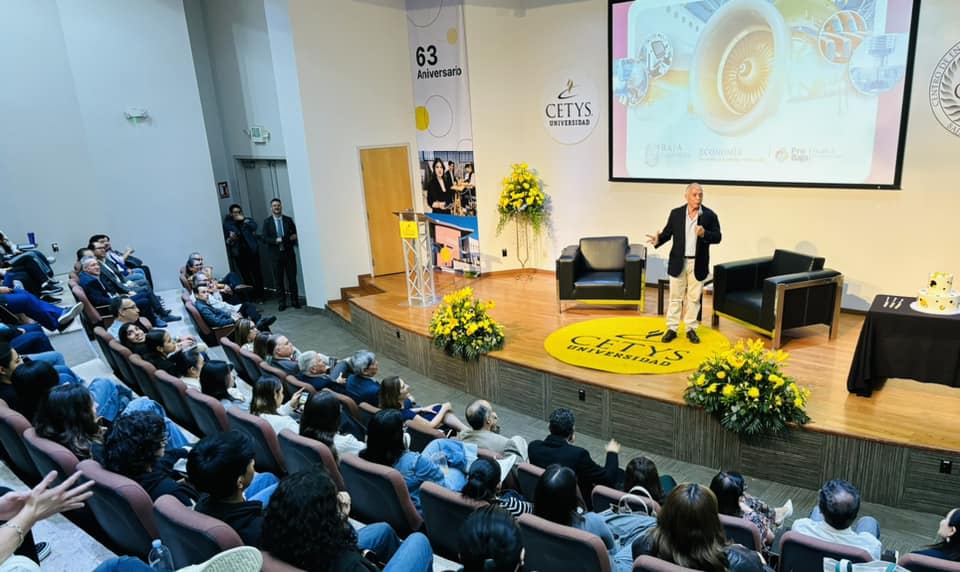
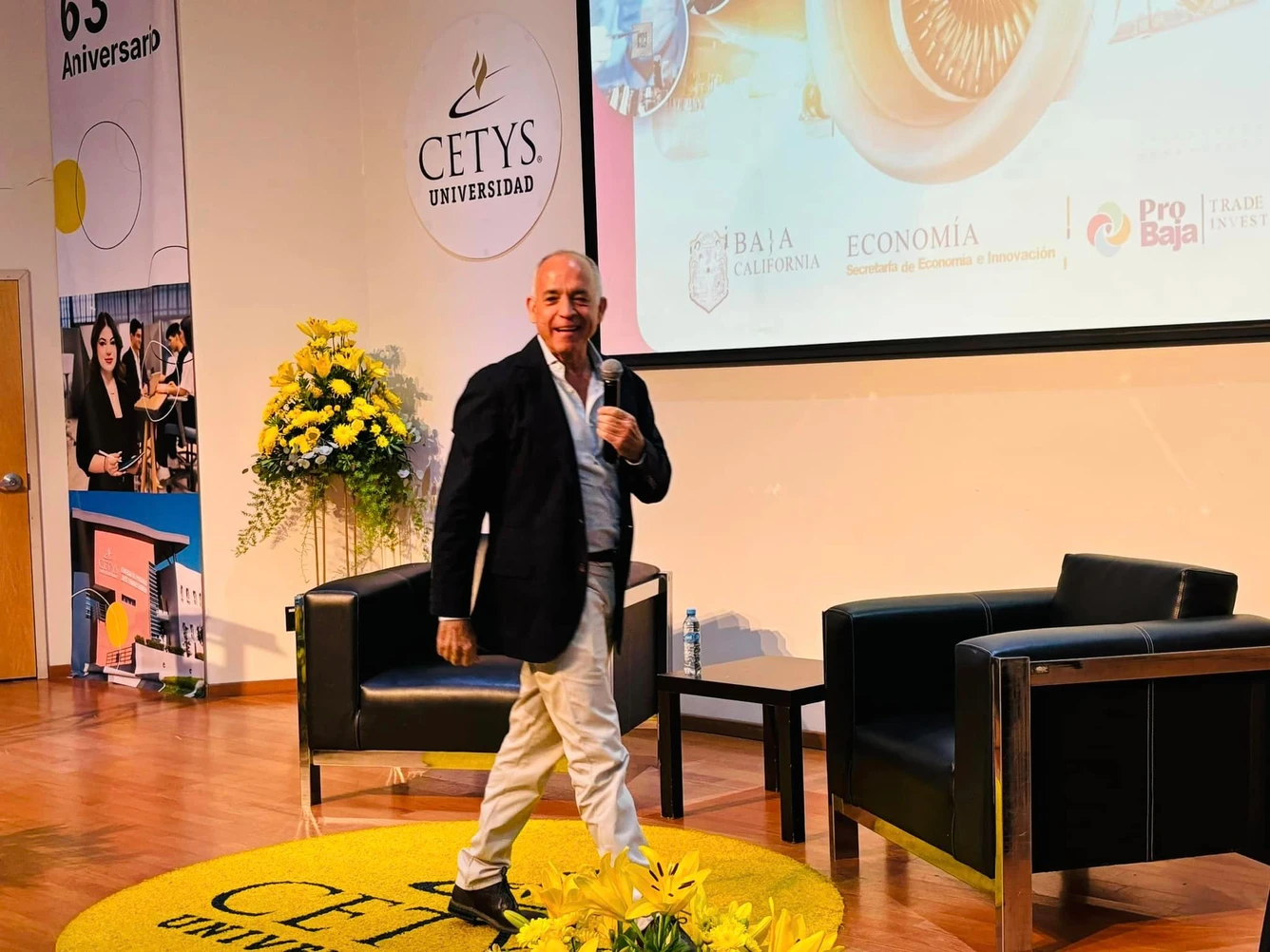
TIJUANA – As part of CETYS Universidad’s 63rd Anniversary, Kurt Honold Morales, Secretary of Economy and Innovation, shared with students and faculty the latest industry trends, taking into account geopolitical events, innovation, and technological advancements such as artificial intelligence, which are driving economic phenomena like “nearshoring” and creating new opportunities for Baja California and for the talent being trained in educational institutions.
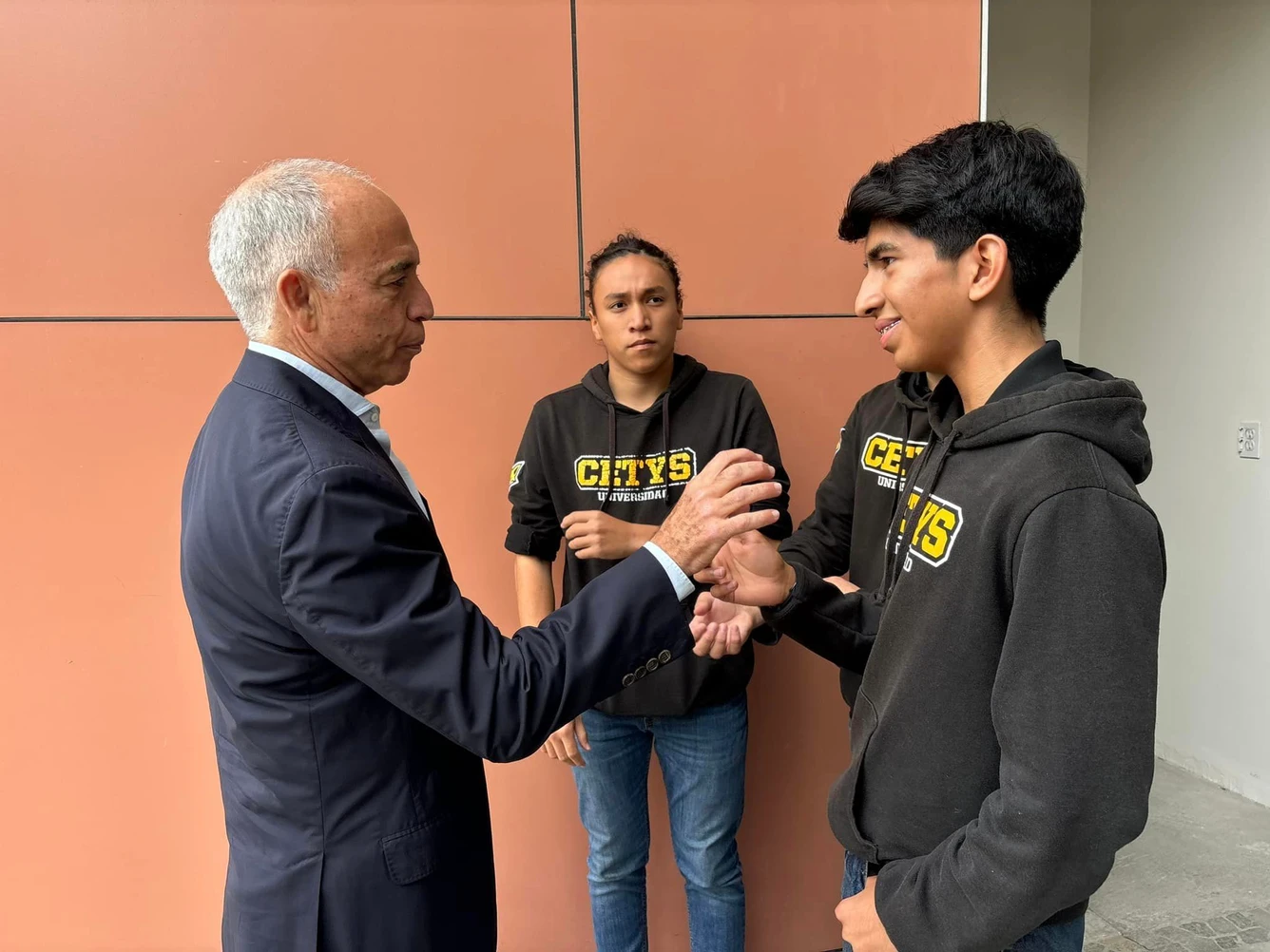
“It is important for young people to recognize these opportunities and understand how they can support their professional and personal development, as well as the key skills that will allow them to successfully enter various growing industries,” he said.
During a series of three keynote lectures held in Mexicali and Tijuana at the invitation of CETYS Universidad System Rector, Dr. Fernando León García, Honold highlighted that Baja California’s economy is one of the most resilient, as demonstrated during the post-pandemic recovery. According to El Economista, the state has maintained the highest quality of employment for three consecutive years, as reflected in the Labor Competitiveness and Quality Index.
Being part of the world’s 4th largest economy alongside California and Arizona, Baja California is an attractive destination for investment due to market access and has attracted USD 5 billion in the past three months.


Some of the state’s standout industries include aerospace, which has had a presence in Baja California for 52 years, with three centers of excellence and 94 companies. The life sciences sector forms a cross-border ecosystem with San Diego, encompassing medical devices, biotechnology, and pharmaceuticals, with a combined value of USD 250 billion.
The state also hosts the largest number of advanced electronics companies in Mexico, with 180 firms employing over 120,000 people, while the automotive industry is moving toward e-mobility. For these and other sectors, semiconductors are critical, positioning Baja California in assembly, testing, and specialized packaging, as well as in the binational strategy between Mexico and the United States.
To maintain leadership and adapt to technological changes, a talent strategy has been implemented involving 113 universities, collectively enrolling more than 127,000 students, of whom 57,000 are pursuing engineering and STEM degrees. This collaboration has facilitated the creation of training programs, certifications, and specialized education with support from institutions such as the University of Arizona, Santander Universities, and EMTECH.
Finally, he emphasized that infrastructure supporting foreign trade and investment will be vital. Projects related to water and energy supply and management, as well as logistics infrastructure such as the Port of Punta Colonet and border crossings, will serve as the platform for the state’s continued growth.